
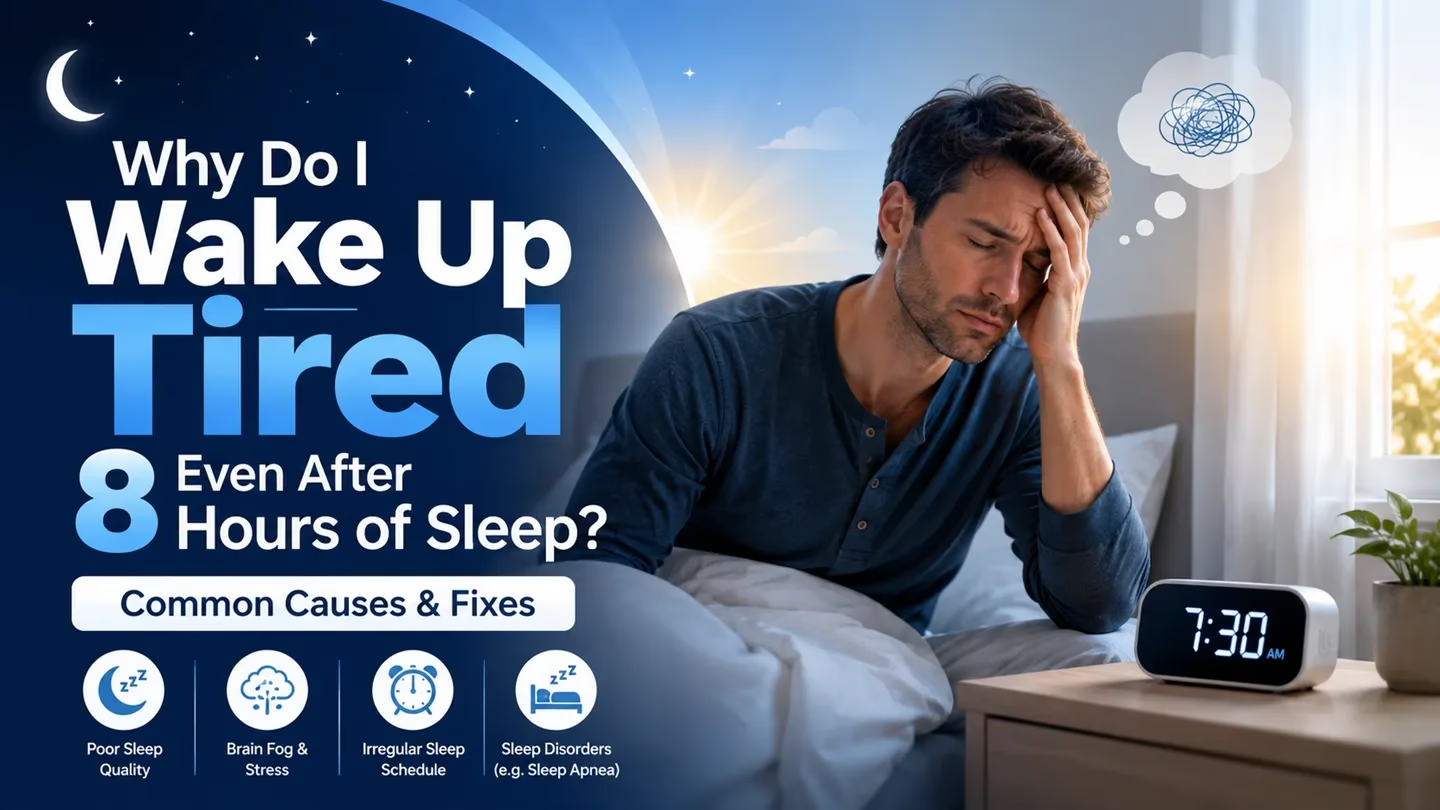
Waking up tired even after 8 hours of sleep can feel confusing. You did the “right” thing. You went to bed. You stayed in bed long enough. But in the morning, your body still feels heavy, your mind feels slow, and you may feel like you need more sleep before the day even begins.
The important point is this:
✅ Sleep is not only about the number of hours.
✅ Sleep quality matters as much as sleep quantity.
You may spend 8 hours in bed, but if your sleep is repeatedly interrupted, too light, poorly timed, or affected by an underlying health problem, your body may not get the deep, restorative rest it needs.
This article explains the common reasons you may wake up tired after 8 hours of sleep, what signs to look for, and what practical steps can help.
💤 8 Hours of Sleep Does Not Always Mean Good Sleep
Many people think that sleeping for 8 hours should automatically make them feel refreshed. But sleep has different stages, including light sleep, deep sleep, and REM sleep. Your body needs proper cycling through these stages for physical recovery, memory processing, hormone regulation, and mental restoration.
You may still wake up tired if:
✅ You wake up many times without remembering
✅ You snore or stop breathing during sleep
✅ Your sleep schedule changes frequently
✅ You drink caffeine or alcohol too late
✅ Stress keeps your brain active at night
✅ Your bedroom is too hot, noisy, or bright
✅ You have an underlying medical condition
✅ You wake up during a deeper sleep stage
So the real question is not only, “How many hours did I sleep?”
A better question is:
“Was my sleep deep, continuous, and restorative?”
🔍 Common Reasons You Wake Up Tired After 8 Hours of Sleep
1. 😴 Poor Sleep Quality
You may sleep for 8 hours but still have poor-quality sleep. This happens when your sleep is light, broken, or restless.
Common causes include:
✅ Noise
✅ Light exposure
✅ Room temperature problems
✅ Uncomfortable mattress or pillow
✅ Stress
✅ Late meals
✅ Alcohol
✅ Caffeine
✅ Phone use before bed
Even brief awakenings can reduce sleep quality. You may not fully remember waking up, but your brain and body still experience the disruption.
Signs of poor sleep quality:
⚠️ You wake up feeling unrefreshed
⚠️ You feel sleepy again within 1–2 hours
⚠️ You need multiple alarms
⚠️ You wake up with a heavy head
⚠️ You feel irritable or foggy during the day
What you can do:
✅ Keep the room dark, quiet, and cool
✅ Avoid screens before sleep
✅ Avoid heavy meals close to bedtime
✅ Keep a fixed sleep and wake time
✅ Use earplugs or white noise if needed
✅ Avoid checking the clock repeatedly at night
2. 😮💨 Sleep Apnea
Sleep apnea is one of the most important causes of waking up tired after a full night of sleep.
In sleep apnea, breathing repeatedly stops and restarts during sleep. These breathing pauses can reduce oxygen levels and cause the brain to briefly wake you up again and again. Many people do not remember these awakenings.
Common signs of sleep apnea:
⚠️ Loud snoring
⚠️ Choking or gasping during sleep
⚠️ Pauses in breathing noticed by a partner
⚠️ Morning headaches
⚠️ Dry mouth on waking
⚠️ Daytime sleepiness
⚠️ Poor concentration
⚠️ High blood pressure
⚠️ Waking up tired despite enough sleep
Sleep apnea is more common in people who are overweight, have a large neck circumference, nasal blockage, high blood pressure, or a family history of sleep apnea. But it can also occur in people who are not overweight.
Why sleep apnea makes you tired:
Your body may be in bed for 8 hours, but your sleep is repeatedly interrupted. This prevents proper deep sleep and recovery.
What to do:
✅ Speak to a doctor if you snore loudly or gasp during sleep
✅ A sleep study may be needed
✅ Weight management may help if excess weight is a factor
✅ Avoid alcohol near bedtime
✅ Treat nasal congestion if present
✅ Do not ignore daytime sleepiness, especially if you drive
3. 🧠 Stress, Anxiety, and Overthinking
Stress can keep your brain active even when your body is sleeping. This can lead to lighter sleep, frequent awakenings, early morning waking, or non-restorative sleep.
You may sleep for 8 hours but still wake up tired because your nervous system has not fully relaxed.
Signs stress is affecting your sleep:
⚠️ Racing thoughts at bedtime
⚠️ Waking up at 3–4 AM
⚠️ Jaw clenching or muscle tension
⚠️ Vivid dreams
⚠️ Feeling tired but wired
⚠️ Waking up with anxiety
⚠️ Difficulty switching off your mind
What can help:
✅ Create a 30–60 minute wind-down routine
✅ Write worries in a notebook before bed
✅ Avoid work messages at night
✅ Try slow breathing for 5 minutes
✅ Keep the bedroom for sleep, not stress
✅ Reduce late-night news, social media, or emotional content
A simple method is the “brain dump” technique. Before bed, write down:
📝 What is worrying me?
📝 What can wait until tomorrow?
📝 What is one small next step?
This tells your brain that the problem has been stored, so it does not need to keep repeating it at night.
4. ☕ Caffeine Too Late in the Day
Caffeine can stay active in the body for several hours. Even if you fall asleep after coffee or tea, your sleep may become lighter and less restorative.
Sources of caffeine include:
✅ Coffee
✅ Tea
✅ Green tea
✅ Energy drinks
✅ Cola
✅ Pre-workout drinks
✅ Some chocolates
✅ Some medications
Signs caffeine may be the problem:
⚠️ You sleep but wake up tired
⚠️ You wake up during the night
⚠️ Your sleep feels shallow
⚠️ You need caffeine again in the morning
⚠️ You feel sleepy in the afternoon and repeat the cycle
Better approach:
✅ Avoid caffeine after mid-afternoon
✅ If you are sensitive, stop caffeine earlier
✅ Replace evening tea or coffee with caffeine-free options
✅ Do not use caffeine to compensate for poor sleep every day
Caffeine can create a cycle: poor sleep leads to more caffeine, and more caffeine leads to poorer sleep.
5. 🍷 Alcohol Before Bed
Alcohol may make you feel sleepy, but it does not improve sleep quality. It can disturb sleep stages, worsen snoring, increase awakenings, and make sleep less restorative.
Alcohol can cause:
⚠️ More fragmented sleep
⚠️ Waking up in the second half of the night
⚠️ Worse snoring
⚠️ Worsening of sleep apnea
⚠️ Morning dehydration
⚠️ Headache or brain fog
If you wake up tired after 8 hours of sleep and drink alcohol in the evening, this may be a major reason.
What can help:
✅ Avoid alcohol close to bedtime
✅ Keep alcohol intake moderate
✅ Hydrate well
✅ Do not use alcohol as a sleep aid
6. 📱 Screen Use Before Sleep
Phones, tablets, laptops, and TVs can delay sleep and affect sleep quality. The problem is not only blue light. It is also mental stimulation.
Scrolling keeps the brain engaged. Social media, videos, emails, and messages can trigger stress, comparison, excitement, or anxiety.
Signs screens may be disturbing your sleep:
⚠️ You feel sleepy but keep scrolling
⚠️ You sleep late without noticing
⚠️ Your mind feels active in bed
⚠️ You wake up foggy
⚠️ You check your phone during the night
What to do:
✅ Stop screens 30–60 minutes before sleep
✅ Keep your phone away from the bed
✅ Use night mode if needed
✅ Avoid emotional or stressful content at night
✅ Use a real alarm clock instead of your phone
7. 🕰️ Irregular Sleep Schedule
Your body has an internal clock called the circadian rhythm. It controls sleepiness, alertness, body temperature, hormones, and energy levels.
Even if you sleep 8 hours, you may wake up tired if your sleep timing keeps changing.
Examples:
⚠️ Sleeping at 10 PM one day and 2 AM the next
⚠️ Waking early on workdays and sleeping late on weekends
⚠️ Rotating shifts
⚠️ Long naps during the day
⚠️ Traveling across time zones
⚠️ Sleeping at a time that does not match your body clock
Why this matters:
Your body likes rhythm. If sleep timing changes frequently, you may get enough hours but still feel unrefreshed.
What can help:
✅ Wake up at the same time daily
✅ Get morning sunlight exposure
✅ Avoid long late naps
✅ Keep weekend sleep close to weekday sleep
✅ Dim lights in the evening
✅ Build a predictable bedtime routine
8. 🦵 Restless Legs Syndrome or Night-Time Movements
Restless legs syndrome can make it hard to fall asleep or stay asleep. It causes an uncomfortable urge to move the legs, often worse in the evening or at night.
Some people also have repeated leg movements during sleep, which can disturb sleep without full awareness.
Symptoms may include:
⚠️ Crawling, pulling, tingling, or uncomfortable leg sensations
⚠️ Urge to move the legs
⚠️ Symptoms worse at rest
⚠️ Relief with movement
⚠️ Difficulty sleeping
⚠️ Daytime tiredness
Restless legs can be linked with low iron levels, pregnancy, kidney disease, some medications, and neurological conditions.
What to do:
✅ Speak to a doctor if symptoms are frequent
✅ Do not self-treat with iron unless advised
✅ Review medications with a healthcare professional
✅ Stretching and gentle movement may help some people
9. 🌡️ Medical Conditions That Cause Fatigue
Sometimes the problem is not your sleep routine. You may wake up tired because your body is dealing with an underlying medical issue.
Common medical causes of tiredness include:
✅ Anemia or iron deficiency
✅ Vitamin B12 deficiency
✅ Vitamin D deficiency
✅ Thyroid disease
✅ Diabetes or blood sugar problems
✅ Depression
✅ Anxiety disorders
✅ Chronic pain
✅ Infections
✅ Kidney or liver problems
✅ Autoimmune conditions
✅ Medication side effects
Clues that fatigue may be medical:
⚠️ Fatigue is new or worsening
⚠️ You feel tired despite improving sleep habits
⚠️ You have weight loss or weight gain
⚠️ You feel unusually cold or hot
⚠️ You have palpitations
⚠️ You have shortness of breath
⚠️ You have heavy periods
⚠️ You feel low, hopeless, or uninterested
⚠️ You have dizziness or weakness
⚠️ You have night sweats or fever
In these cases, do not assume it is “just poor sleep.” A medical review may be needed.
10. 💊 Medication Side Effects
Some medications can make you feel sleepy, tired, or mentally foggy. Others can disturb sleep at night.
Examples include some:
✅ Antihistamines
✅ Antidepressants
✅ Blood pressure medicines
✅ Pain medicines
✅ Anti-anxiety medicines
✅ Muscle relaxants
✅ Some cold and flu medicines
Never stop prescribed medication suddenly without medical advice. Instead, speak to your doctor or pharmacist. Sometimes changing the timing, dose, or medication type can help.
11. 🍽️ Late Heavy Meals and Acid Reflux
Eating a large meal close to bedtime can disturb sleep. It may cause indigestion, bloating, reflux, or frequent awakenings.
Acid reflux can also cause coughing, throat irritation, sour taste, chest burning, or waking during the night.
What can help:
✅ Avoid heavy meals 2–3 hours before bed
✅ Reduce spicy, oily, or acidic foods at night
✅ Avoid lying down immediately after eating
✅ Elevate the head of the bed if reflux is frequent
✅ Speak to a doctor if reflux happens often
12. 🚰 Dehydration or Poor Nutrition
Mild dehydration can contribute to morning headaches, dry mouth, low energy, and poor concentration. Poor nutrition can also affect energy levels during the day.
Possible contributors include:
✅ Not drinking enough water
✅ Skipping meals
✅ Very low-calorie dieting
✅ Low protein intake
✅ Excess sugar intake
✅ Iron, B12, or vitamin D deficiency
A balanced diet supports stable energy, better mood, and better sleep quality.
Basic approach:
✅ Drink water regularly during the day
✅ Eat enough protein
✅ Include vegetables and fiber
✅ Avoid excessive sugar at night
✅ Do not rely on caffeine instead of meals
🧪 How to Know Why You Wake Up Tired
A simple sleep diary can help you identify patterns. Track your sleep for 7–14 days.
Keep a note of:
📝 Bedtime
📝 Wake-up time
📝 Number of night awakenings
📝 Caffeine timing
📝 Alcohol intake
📝 Exercise
📝 Screen use before bed
📝 Stress level
📝 Snoring or gasping
📝 Daytime sleepiness
📝 Naps
📝 Medications
This helps separate lifestyle causes from possible sleep disorders or medical causes.
✅ 7-Day Reset Plan for Better Morning Energy
Day 1: Fix Your Wake-Up Time
Choose one wake-up time and keep it consistent, even on weekends.
Day 2: Remove Late Caffeine
Avoid caffeine after mid-afternoon. If you are sensitive, stop earlier.
Day 3: Reduce Screens Before Bed
Keep your phone away for the last 30–60 minutes before sleep.
Day 4: Improve Your Bedroom
Make your room dark, quiet, cool, and comfortable.
Day 5: Avoid Heavy Late Meals
Finish large meals at least 2–3 hours before bed.
Day 6: Add Morning Light
Get natural daylight soon after waking. This helps reset your body clock.
Day 7: Check for Warning Signs
Ask yourself:
✅ Do I snore loudly?
✅ Has anyone noticed breathing pauses?
✅ Do I wake up choking or gasping?
✅ Do I feel sleepy while driving?
✅ Do I wake with morning headaches?
✅ Is my tiredness affecting work or daily life?
If yes, seek medical advice.
⚠️ When Should You See a Doctor?
You should speak to a healthcare professional if:
⚠️ You wake up tired most days despite 7–9 hours of sleep
⚠️ You snore loudly or gasp during sleep
⚠️ Someone notices pauses in your breathing
⚠️ You feel sleepy while driving
⚠️ You have morning headaches often
⚠️ You have persistent fatigue for more than a few weeks
⚠️ You have unexplained weight changes
⚠️ You have heavy periods, dizziness, or weakness
⚠️ You feel depressed, hopeless, or anxious
⚠️ You have chest pain, shortness of breath, fever, or night sweats
Sleep apnea, anemia, thyroid disease, vitamin deficiencies, depression, and other medical conditions can be treatable, but they need proper evaluation.
🛌 How to Wake Up Feeling More Refreshed
Here are practical habits that improve sleep quality:
✅ Sleep and wake at consistent times
✅ Get sunlight in the morning
✅ Exercise during the day
✅ Avoid caffeine late in the day
✅ Avoid alcohol close to bedtime
✅ Keep the bedroom cool, dark, and quiet
✅ Avoid large meals near bedtime
✅ Reduce screen time before sleep
✅ Create a relaxing bedtime routine
✅ Manage stress before getting into bed
✅ Treat snoring, reflux, pain, or nasal blockage
✅ Seek medical help if symptoms continue
Small changes can make a big difference, but if tiredness continues, do not ignore it.
🧠 Key Takeaway
Waking up tired after 8 hours of sleep usually means your body is not getting restorative sleep. The cause may be poor sleep quality, stress, caffeine, alcohol, screen use, an irregular schedule, sleep apnea, restless legs, medication effects, or an underlying medical condition.
The number of hours matters, but the quality of sleep matters just as much.
If this happens occasionally, improving sleep habits may help. But if you wake up tired most days, snore loudly, gasp during sleep, feel sleepy while driving, or have persistent fatigue, it is important to speak to a healthcare professional.
FAQs
1. Why do I wake up tired after 8 hours of sleep?
You may wake up tired after 8 hours of sleep because your sleep quality is poor. Common causes include stress, sleep apnea, caffeine, alcohol, screen use, an irregular sleep schedule, medical conditions, or frequent night awakenings.
2. Can sleep apnea make me tired even after sleeping enough?
Yes. Sleep apnea can repeatedly interrupt breathing during sleep. These interruptions can reduce oxygen levels and disturb deep sleep, causing morning tiredness even after a full night in bed.
3. Is 8 hours of sleep enough for everyone?
Not always. Many adults need around 7–9 hours, but individual needs vary. Some people feel best with slightly more sleep, while others feel well with slightly less. Sleep quality and consistency are also important.
4. Why do I wake up with brain fog?
Morning brain fog can happen due to poor sleep quality, waking during deep sleep, sleep apnea, stress, dehydration, medication effects, or medical problems such as anemia, thyroid disease, or vitamin deficiencies.
5. What should I do if I always wake up tired?
Start by improving your sleep routine, reducing caffeine and screens before bed, keeping a fixed wake-up time, and tracking your sleep. If tiredness continues, or if you snore, gasp, or feel very sleepy during the day, see a doctor.
Medical Disclaimer
This article is for educational purposes only and does not replace professional medical advice, diagnosis, or treatment. If you have persistent fatigue, loud snoring, breathing pauses during sleep, chest pain, shortness of breath, severe depression, or excessive daytime sleepiness, consult a qualified healthcare professional.
ABOUT THE AUTHOR
Dr. Nora West is a highly skilled MBBS doctor with a special interest in women’s health and patient education. She is dedicated to providing compassionate care and believes in building strong doctor–patient relationships based on trust and understanding. Dr. Nora focuses on empowering her patients with the knowledge they need to make informed decisions about their health. She is particularly passionate about preventive medicine, nutrition, and lifestyle interventions that can significantly improve quality of life. Known for her warmth and professionalism, Dr. Nora combines evidence-based medicine with a personalized approach, ensuring every patient feels supported on their journey to better health.
- Dr. Nora West

- Dr. Nora West

- Dr. Nora West

- Dr. Nora West







Add comment