

Fatty liver disease is one of the most common liver conditions worldwide. Many people discover it unexpectedly after an ultrasound scan or routine blood test, often without having any noticeable symptoms.
The condition is now commonly referred to as Metabolic Dysfunction-Associated Steatotic Liver Disease, or MASLD, when liver fat occurs alongside metabolic risk factors such as excess weight, diabetes, high blood pressure or abnormal cholesterol levels.
Although fatty liver is common, it should not simply be ignored. In some people, the condition remains mild, while in others it can progress to inflammation, liver scarring and eventually cirrhosis.
The most important question is therefore not simply:
“Do I have fat in my liver?”
It is:
“Has the fatty liver caused significant inflammation or fibrosis?”
Understanding this distinction helps patients avoid unnecessary panic while ensuring that people at higher risk receive appropriate assessment and treatment.
What Is Fatty Liver Disease?
The liver normally contains a small amount of fat. Fatty liver develops when excessive fat accumulates inside liver cells.
In MASLD, this accumulation is typically associated with metabolic problems such as insulin resistance, obesity, type 2 diabetes or abnormal blood lipids.
Fatty liver disease can range from simple fat accumulation to more advanced liver disease.
The general progression may look like this:
Liver fat → liver inflammation → fibrosis → cirrhosis
Not everyone progresses through these stages.
Many people with simple fatty liver never develop severe liver disease. However, people who develop significant inflammation and fibrosis require closer monitoring because their risk of complications is higher.
The inflammatory form of metabolic fatty liver disease is now called Metabolic Dysfunction-Associated Steatohepatitis, or MASH.
What Causes Fatty Liver?
The most common drivers of metabolic fatty liver disease include:
- Being overweight or obese
- Excess fat around the abdomen
- Type 2 diabetes
- Prediabetes
- High triglycerides
- High cholesterol
- High blood pressure
- Insulin resistance
- Metabolic syndrome
- Physical inactivity
Fatty liver can also occur in people who are not significantly overweight.
Other conditions may contribute to liver fat, including some hormonal disorders and certain medications.
Alcohol intake is also important. Alcohol-related liver disease and metabolic fatty liver can sometimes overlap, so doctors should assess actual alcohol consumption rather than assuming that all fatty liver is metabolic.
Other causes of abnormal liver tests or liver fat may also need to be considered, including viral hepatitis, autoimmune liver disease, iron overload and less common metabolic or genetic conditions.
What Are the Symptoms of Fatty Liver?
One of the challenges with fatty liver disease is that it is often silent.
Most people have no specific symptoms.
The condition may be discovered during:
- A routine health check
- An abdominal ultrasound
- Blood tests showing elevated liver enzymes
- Investigation of another medical problem
Some people report:
- Fatigue
- General tiredness
- Mild discomfort or heaviness in the right upper abdomen
However, these symptoms are not specific to fatty liver.
Symptoms become much more concerning when advanced liver disease develops.
Warning symptoms can include:
- Yellowing of the skin or eyes
- Abdominal swelling
- Leg swelling
- Vomiting blood
- Black stools
- Easy bruising
- Confusion or excessive drowsiness
These features can indicate advanced cirrhosis or complications of liver disease and require prompt medical evaluation.
Can Fatty Liver Become Serious?
Yes, but the risk varies considerably between individuals.
The presence of liver fat alone does not necessarily mean that severe liver disease will develop.
The most important long-term factor is usually the amount of fibrosis, or scar tissue, in the liver.
Fibrosis develops when repeated liver injury causes scar tissue to accumulate.
Early fibrosis may be limited. More advanced fibrosis can eventually develop into cirrhosis, where the liver architecture becomes severely scarred.
Advanced liver disease can lead to:
- Portal hypertension
- Fluid accumulation in the abdomen
- Internal bleeding from varices
- Liver failure
- Hepatic encephalopathy
- Increased risk of liver cancer
This is why current clinical approaches emphasize fibrosis risk assessment, rather than simply grading fatty liver as mild, moderate or severe on ultrasound.
Can You Have Fatty Liver With Normal Liver Enzymes?
Yes.
This is an important point.
Some people assume that if their ALT and AST are normal, their liver must be healthy.
That is not always true.
A person may have fatty liver—and occasionally clinically important fibrosis—even when standard liver enzyme levels are within the laboratory reference range.
Similarly, elevated ALT does not automatically mean that severe fibrosis is present.
Liver enzymes show evidence of liver cell injury, but they do not directly measure liver scarring.
For this reason, doctors often use additional tools to estimate fibrosis risk.
How Is Fatty Liver Diagnosed?
Fatty liver may first be detected through imaging.
Tests may include:
- Ultrasound
- CT scan
- MRI
- Elastography such as FibroScan
Ultrasound can often identify increased liver fat, although it is not highly accurate for determining how much fibrosis is present.
Blood tests are also important.
Common investigations may include:
- ALT
- AST
- GGT
- Alkaline phosphatase
- Bilirubin
- Albumin
- Platelet count
- Blood glucose
- HbA1c
- Cholesterol
- Triglycerides
Additional tests may be requested when another liver condition is suspected.
What Is the FIB-4 Score?
One commonly used tool is the FIB-4 score.
It uses four pieces of information:
- Age
- AST
- ALT
- Platelet count
The score helps estimate whether a person is at low or increased risk of advanced fibrosis.
For many adults, a FIB-4 below approximately 1.3 suggests a relatively low probability of advanced fibrosis.
People with higher scores may require further assessment with tests such as FibroScan or another non-invasive fibrosis test.
The exact interpretation depends on age and clinical context. In particular, different thresholds may be used in older adults, and FIB-4 is not intended to provide a final diagnosis on its own.
What Is a FibroScan?
FibroScan is a non-invasive test that measures how stiff the liver is.
In general, increasing liver stiffness may indicate increasing fibrosis.
The test is quick and does not require a needle or surgery.
It can also provide information related to liver fat.
FibroScan is especially useful when the initial fibrosis assessment is not clearly low risk.
Some people may require more advanced imaging or, less commonly, liver biopsy when results are unclear or when a definite diagnosis is required.
Can Fatty Liver Be Reversed?
Fatty liver can often improve substantially, particularly when it is addressed before advanced liver scarring develops.
Weight loss is one of the most effective interventions for people who are overweight.
A reduction of approximately 5–10% of body weight can produce meaningful improvements in liver fat, inflammation and metabolic health.
Greater sustained weight loss may provide greater benefit, particularly in people with inflammatory fatty liver disease.
For example, a person who weighs 100 kg may initially aim to lose 5–10 kg gradually and sustainably.
Crash diets are usually not the best strategy.
The objective is long-term metabolic improvement rather than a short period of severe calorie restriction followed by weight regain.
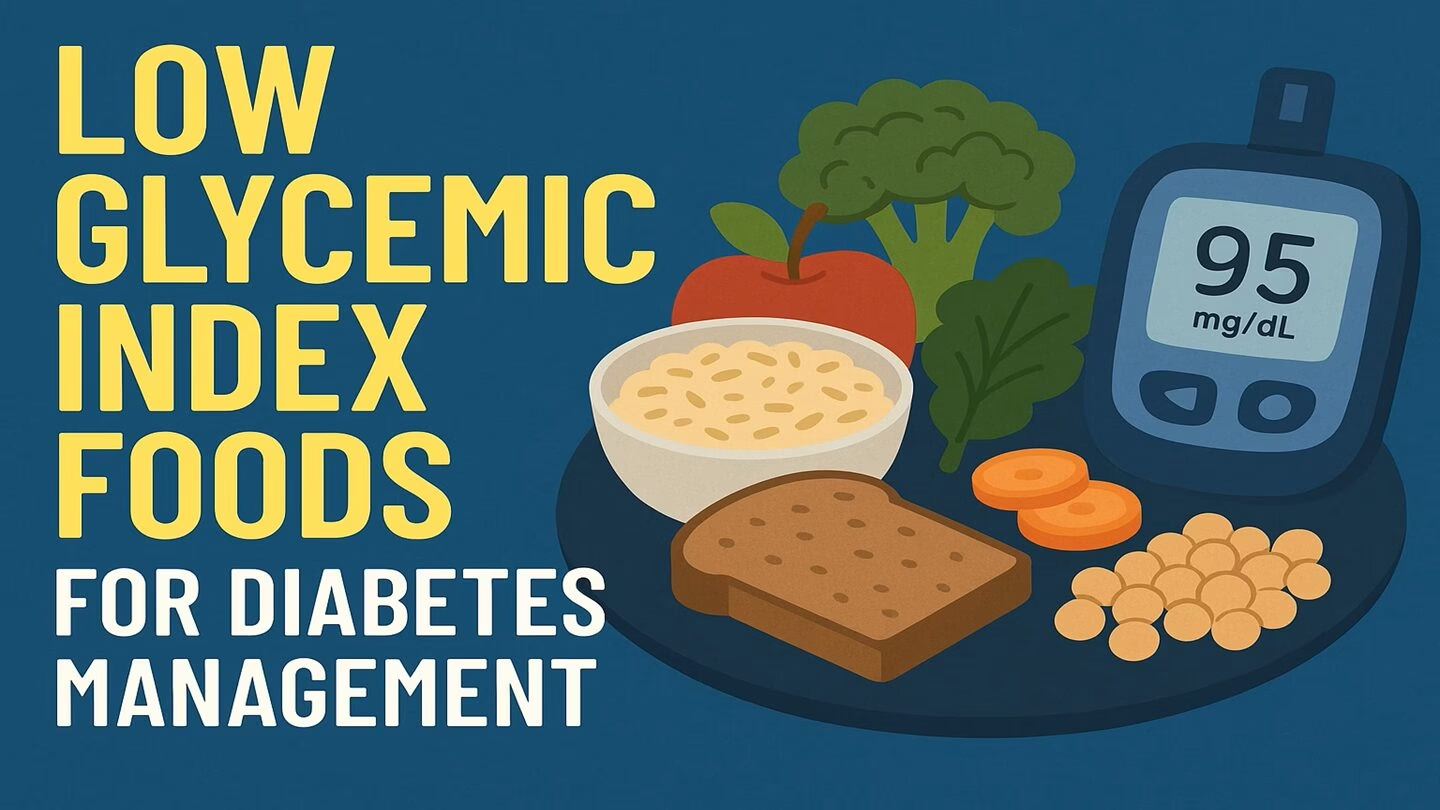
What Is the Best Diet for Fatty Liver?
There is no single “fatty liver diet” that works for everyone.
The most important principle for someone who is overweight is to achieve a sustainable calorie deficit while maintaining good nutrition.
A Mediterranean-style dietary pattern is commonly recommended.
This includes more:
- Vegetables
- Whole fruit
- Legumes
- Whole grains
- Fish
- Nuts
- Seeds
- Olive oil
- High-fibre foods
People should reduce:
- Sugary drinks
- Excess sweets
- Refined carbohydrates
- Highly processed foods
- Excess saturated fat
- Large portion sizes
- Excess calorie intake
Sugary drinks deserve particular attention because they can provide large amounts of rapidly absorbed sugar without producing much fullness.
Replacing sweetened drinks with water, unsweetened tea or other low-calorie alternatives can make a significant difference.
How Much Exercise Is Recommended?
Physical activity improves insulin sensitivity, cardiovascular health and liver metabolism.
A practical target is around:
150 minutes of moderate-intensity exercise per week.
For example:
30 minutes of brisk walking on five days each week.
Resistance training can also be beneficial.
The ideal approach often combines aerobic exercise with strength training.
Importantly, exercise can improve liver fat and metabolic health even before major weight loss occurs.
What About Diabetes, Cholesterol and Blood Pressure?
Fatty liver should not be treated as an isolated liver problem.
It is frequently part of a broader metabolic condition.
People with MASLD may also have:
- Diabetes
- Obesity
- High blood pressure
- High cholesterol
- High triglycerides
These conditions should be treated appropriately.
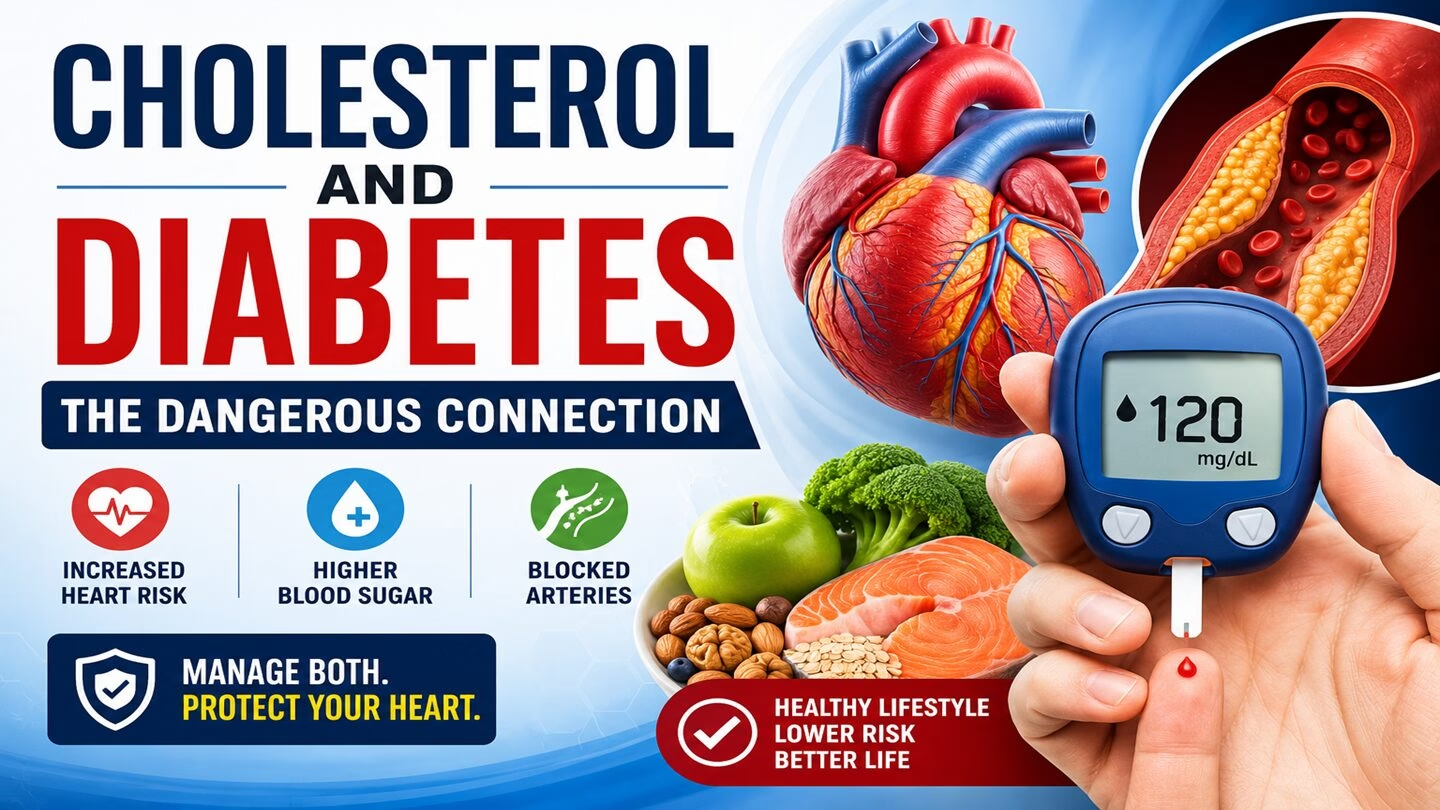
Cardiovascular disease is an important health risk in people with metabolic fatty liver disease, which is why controlling blood pressure, diabetes, weight and cholesterol is essential.
Statins are not automatically contraindicated simply because someone has fatty liver.
When a person has an appropriate cardiovascular indication, cholesterol-lowering treatment may still be required.
Are Medicines Available for Fatty Liver Disease?
Lifestyle treatment remains the foundation of management, but treatment options are evolving.
Certain patients with obesity or diabetes may benefit from medications that promote weight loss and improve metabolic health.
More recently, treatments have also become available for selected patients with inflammatory fatty liver disease and significant fibrosis.
For example, specialist guidance now includes treatments such as resmetirom and, in selected patients with MASH and moderate-to-advanced fibrosis, semaglutide-based therapy.
These treatments are not intended for everyone who has fatty liver on an ultrasound.
Treatment decisions depend on fibrosis stage, metabolic conditions, contraindications and specialist assessment.
Do Liver Detox Products Work?
Patients with fatty liver are frequently targeted by advertisements for:
- Liver detox drinks
- Herbal cleanses
- Supplements
- Detox teas
- “Liver repair” products
These should be approached cautiously.
No commercial detox product can replace:
- Weight management
- Exercise
- Diabetes control
- Cholesterol treatment
- Fibrosis assessment
Some herbal products and supplements can themselves cause liver injury.
Patients should tell their doctor about any supplements they are taking.
When Should You See a Doctor?
You should discuss fatty liver with a healthcare professional, particularly if you also have:
- Diabetes
- Obesity
- High triglycerides
- Persistently elevated liver enzymes
- Low platelets
- A history of significant alcohol intake
- A family history of liver disease
Urgent medical assessment is needed if you develop:
- Jaundice
- Vomiting blood
- Black stools
- Significant abdominal swelling
- New confusion
- Severe weakness associated with liver disease
The Bottom Line
Fatty liver disease is extremely common, and many people with early disease can improve their liver health considerably.
However, the condition should not be judged only by an ultrasound report or ALT level.
The major clinical question is whether significant liver fibrosis is present.
For many patients, the practical approach involves:
Identifying metabolic risk factors → assessing fibrosis risk → improving weight, diet and exercise → treating diabetes, cholesterol and blood pressure → arranging further liver assessment when indicated.
Fatty liver is often manageable, particularly when detected early.
Rather than searching for a quick “liver detox,” focus on the factors that genuinely change long-term outcomes: healthy weight, regular physical activity, metabolic control and appropriate medical follow-up.
Health Talks educational article. This information is intended for general education and does not replace individual medical diagnosis, investigation or treatment.




Add comment