
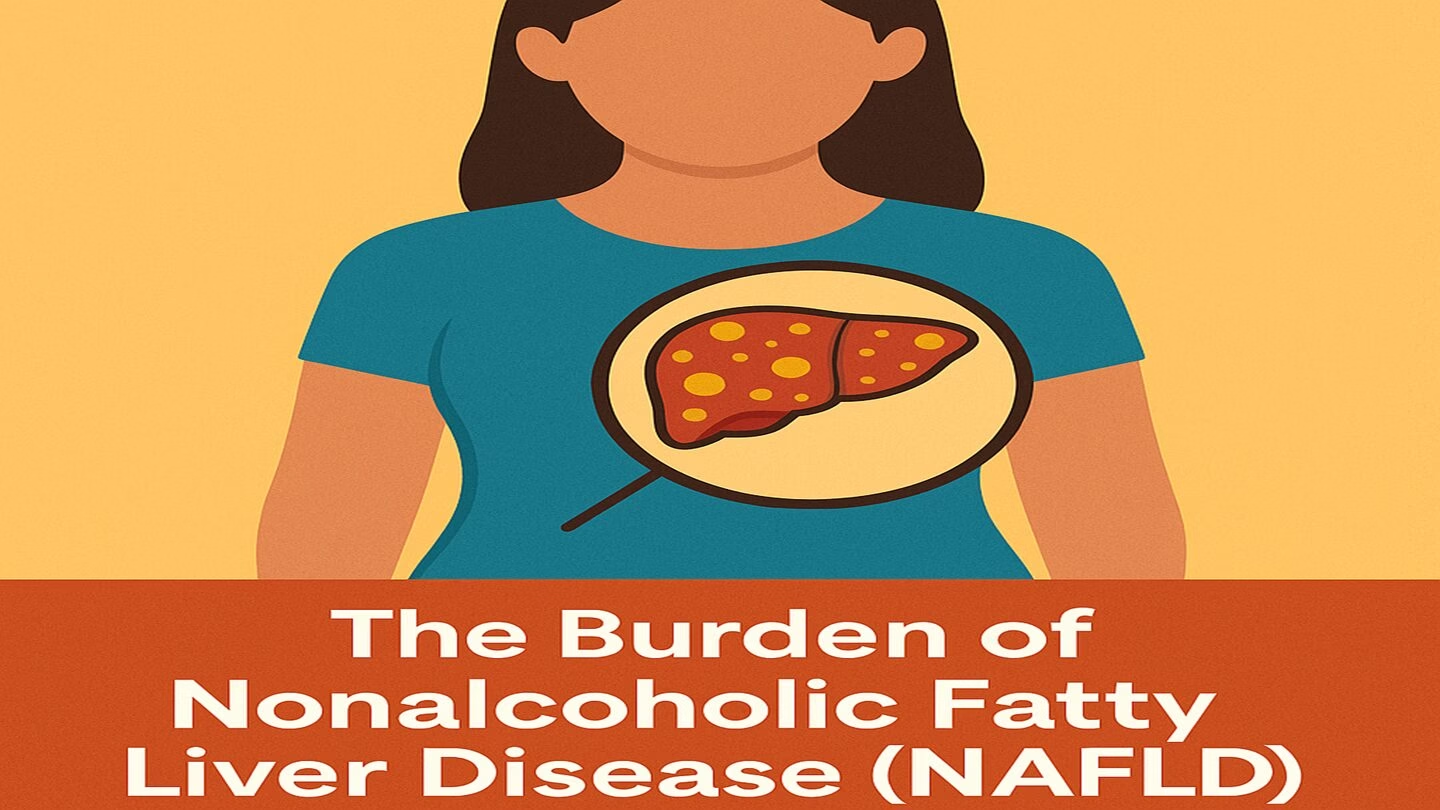
Also called “lean NAFLD” or, in today’s terminology, part of MASLD (metabolic dysfunction–associated steatotic liver disease), fatty liver in people with a normal BMI is common, under-recognized, and not benign. Journal of Hepatology
Why this matters
- You don’t need to be overweight to develop liver fat, inflammation, or scarring. Lean NAFLD patients can progress to steatohepatitis (MASH), fibrosis, cirrhosis, and face higher risks of type 2 diabetes and heart disease—often without classic warning signs.
- Because clinicians often “screen by sight,” lean people are diagnosed late, missing the chance to reverse disease early with lifestyle and (now) the first approved medications.
How common is lean NAFLD?
Prevalence varies by region and definition, but pooled analyses suggest ~7–10% of the general population may have lean/non-obese NAFLD, representing ~10–20% of all NAFLD cases—with higher rates in parts of Asia despite normal BMI cut-offs. PMC+1
Why do non-obese people get fatty liver?
Even at a normal body weight, several factors drive liver fat and injury:
- Visceral fat & “TOFI” phenotype: normal BMI but high intra-abdominal fat. Waist circumference and waist-to-height ratio matter more than weight.
- Insulin resistance & metabolic dysfunction: dyslipidemia, prediabetes, hypertension, PCOS, sleep apnea.
- Genetics: risk variants (e.g., PNPLA3, TM6SF2) amplify susceptibility.
- Diet quality: high fructose/simple sugars, ultra-processed foods, low fiber/protein.
- Gut–liver axis: dysbiosis and increased intestinal permeability.
- Endocrine factors: hypothyroidism, low muscle mass (sarcopenia), menopause/androgen imbalance.
The clinical burden (it’s more than the liver)
Lean NAFLD is not a milder form. Compared to obese NAFLD, lean patients may have:
- Similar or greater fibrosis risk per stage when metabolic risk is present.
- Higher cardiometabolic events (MI, stroke) than BMI implies.
- Quality-of-life impacts: fatigue, brain fog, reduced exercise capacity.
New names, same problems—clearer framing
In 2023, experts replaced “NAFLD/NASH” with MASLD/MASH, emphasizing metabolic roots and reducing stigma. “Steatotic liver disease” is the umbrella, and MASH denotes the inflammatory, progressive form that drives scarring. PubMed+1
How to spot lean NAFLD (so it isn’t missed)
Who deserves evaluation?
- Normal BMI but central adiposity (high waist), prediabetes/diabetes, dyslipidemia, hypertension, PCOS, OSA, hypothyroidism, or strong family history.
- Unexplained ALT/AST elevation (even slight), fatty liver on imaging, or elevated liver stiffness on elastography.
First-line workup (primary care friendly)
- Risk stratify for fibrosis (this determines urgency):
- Use FIB-4 (age, AST, ALT, platelets).
- If indeterminate/high, add transient elastography (FibroScan) or ELF blood test.
- Imaging for steatosis: conventional ultrasound can miss mild fat in lean people; CAP/FibroScan or MRI-PDFF are more sensitive.
- Look beyond BMI: check waist, blood pressure, A1c/OGTT, lipids, TSH; assess sleep and activity.
When to refer
- FIB-4 high, liver stiffness elevated, rising enzymes, suspected MASH or stage ≥F2 fibrosis, or diagnostic uncertainty.
Management: targeted, realistic, effective
1) Lifestyle—still the foundation (even if you’re not trying to “lose weight”)
- Goals: For many, 5–7% weight loss improves liver fat and inflammation; ≥10% can regress fibrosis—but even without weight loss, better diet quality and exercise reduce liver fat. AASLD and GI guidance emphasize a Mediterranean-style pattern, reduced fructose/sugary beverages, adequate protein, and high fiber. PubMed+1
- Exercise: Aim for 150–300 min/week moderate aerobic (or 75–150 min vigorous) plus 2–3 days/week resistance training; HIIT is a time-efficient option. Exercise independently reduces hepatic fat and improves insulin sensitivity. PMC+1
- Coffee (without sugar) is associated with less advanced disease; alcohol should be minimized/avoided in fatty liver.
Lean-specific tips
- Focus on body composition: prioritize resistance training and protein (≈1.0–1.2 g/kg/day) to build muscle and cut visceral fat.
- Track waist and fitness improvements, not just weight.
- Time your carbs around activity; cut sugary drinks; emphasize legumes, nuts, fish, olive oil, vegetables, berries.
2) Medications—important updates
- Resmetirom (Rezdiffra®): First FDA-approved therapy (Mar 14, 2024) for non-cirrhotic MASH with F2–F3 fibrosis, to be used with diet and exercise. Acts as a liver-selective thyroid hormone receptor-β agonist to reduce liver fat/injury. Not a fit for everyone (requires staging and monitoring). U.S. Food and Drug Administration+1
- Semaglutide (Wegovy®): FDA-approved (Aug 15, 2025) under accelerated approval for MASH with moderate-to-advanced fibrosis based on ESSENCE Phase 3 results showing histologic improvement; benefits extend beyond weight in metabolic pathways. U.S. Food and Drug Administration+2New England Journal of Medicine+2
What about others? Vitamin E (in select non-diabetic biopsy-proven NASH), pioglitazone (especially with T2D), and emerging agents may be considered case-by-case per specialist guidance. Lifestyle change remains mandatory alongside any drug therapy.
What this means for patients and clinicians
Key challenges
- Under-screening: “Looks healthy” ≠ low risk.
- Silent progression: Many lean patients present when fibrosis is established.
- Stigma & semantics: The newer MASLD/MASH framework helps focus on metabolic drivers, even without obesity. Journal of Hepatology
Practical pathway (clinic checklist)
- Screen at-risk normal-BMI patients (central adiposity, metabolic risks, PCOS/OSA, abnormal LFTs).
- Calculate FIB-4 → if elevated/indeterminate, arrange elastography.
- Start Mediterranean-style diet, exercise prescription, sleep optimization, and risk-factor control immediately—don’t wait for imaging.
- If F2–F3 fibrosis or MASH: refer for hepatology evaluation and discuss resmetirom/semaglutide eligibility alongside lifestyle therapy. U.S. Food and Drug Administration+1
Frequently asked questions
Can I reverse lean NAFLD?
Often, yes—early stages (steatosis/inflammation) can improve with diet quality, regular exercise, and risk-factor control; fibrosis may regress with sustained change and, for eligible patients, with approved pharmacotherapy. PubMed+1
If I’m not overweight, do I still need to change my diet?
Yes. Quality > calories: reduce added sugars/fructose, ultra-processed foods; increase fiber, lean protein, and healthy fats. Many lean patients improve liver fat without major scale changes. American Gastroenterological Association
What exercise is “best”?
The best is what you’ll do consistently: accumulate 150–300 min/week moderate aerobic activity and add resistance training. HIIT offers added metabolic punch if you enjoy it and are cleared for vigorous activity. PMC+1
Do I need a liver biopsy?
Biopsy is now less common thanks to non-invasive tests (FIB-4, ELF, elastography). It’s reserved for unclear cases or when results would change management.
Bottom line (for readers & patients)
- Lean NAFLD is real, common, and consequential—don’t let a normal BMI delay evaluation.
- Early, personalized lifestyle therapy can meaningfully improve liver health—even without weight loss.
- For patients with MASH and fibrosis, two FDA-approved options (resmetirom and semaglutide) now complement lifestyle change and specialist care. U.S. Food and Drug Administration+1
ABOUT THE AUTHOR
Dr. Abid Akram is a dedicated medical practitioner known for his patient-centered approach and strong clinical expertise. With an MBBS degree and years of hands-on experience, he has developed a keen interest in preventive healthcare and internal medicine. Dr. Abid firmly believes that health is not just about treating illness but about empowering individuals to make lifestyle choices that prevent disease and promote long-term well-being. His approachable personality and ability to explain complex medical concepts in simple terms make him a trusted doctor among his patients. Outside of his clinical practice, Dr. Abid contributes to community health awareness programs, aiming to bridge the gap between medical knowledge and everyday life.
- Dr. Abid Akram

- Dr. Abid Akram

- Dr. Abid Akram

- Dr. Abid Akram










Add comment